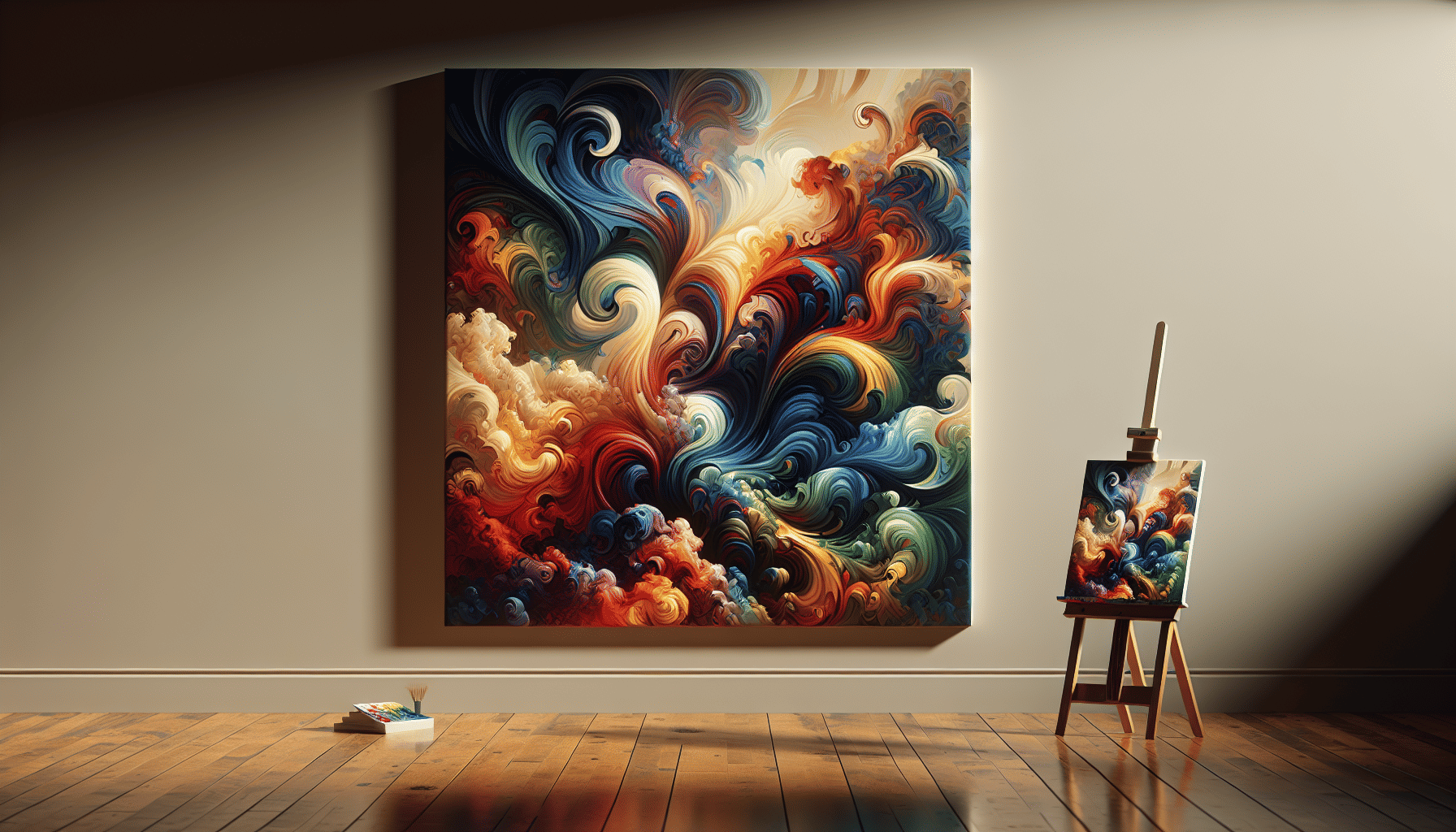
Abstract art transcends the boundaries of visual representation, inviting viewers into a realm where imagination and reality coalesce. Unlike traditional forms that depict recognizable subjects, abstract art thrives in ambiguity, urging us to see beyond the tangible and engage with the profound expressions of the unseen.
The beauty of abstract art lies in its open-ended interpretation. By foregoing explicit narratives, abstract pieces compel the audience to engage personally, evoking emotions and thoughts unique to each observer. This subjective experience is central to abstract art, for it entices the viewer to become an active participant rather than a passive onlooker. Every brushstroke and color choice becomes an invitation to explore personal insights and emotions.
At its core, abstract art challenges the conventional understanding of perception. It reflects the idea that reality is not a fixed construct but a fluid spectrum of experiences and interpretations. This form of art allows artists to convey the complexities of human emotion and thought without the constraints of literal representation. Shapes, colors, and forms intertwine to create compositions that symbolize the intricate layers of human experience.
Pioneers of abstract art, such as Wassily Kandinsky and Jackson Pollock, laid the groundwork for this artistic revolution. Kandinsky, with his synesthetic perception, envisioned his works as musical compositions, where colors emanated harmony and rhythm. Pollock, through his iconic drip paintings, expressed an unfiltered spontaneity that captured the dynamic nature of existence. Their works exemplify the ability of abstract art to encapsulate the ineffable, transforming the invisible into a visual symphony.
In contemporary times, abstract art continues to evolve, reflecting the diverse cultural and sociopolitical landscapes. Artists employ a myriad of mediums and techniques, from digital interfaces to three-dimensional installations, pushing the boundaries further and redefining what abstract art can achieve. This evolution signifies not only a growth in artistic expression but also a broader acceptance of abstract art's role in society as a catalyst for introspection and dialogue.
Engaging with abstract art requires a willingness to embrace uncertainty and appreciate the beauty in the enigmatic. It inspires us to look beyond surface appearances and explore the depth of our consciousness. The unseen becomes a mirror reflecting our innermost thoughts, fears, and desires. In this space, imagination and reality intertwine, each influencing and reshaping the other.
Ultimately, abstract art serves as a testament to the limitless potential of human creativity. It reveals that art is not merely a depiction of what is visible but a profound exploration of what lies beneath the surface. By embracing the unseen, abstract art encourages us to appreciate the myriad ways we can understand and interpret the world around us, offering a glimpse into the infinite possibilities of human expression.